The 4 Best Korean Apps for Beginners (Tested From Zero)
Published
This post contains affiliate links. If you buy through one of them, I may earn a commission at no extra cost to you. See Full Affiliate Disclaimer.
Table of Contents
- My Korean so far (timeline)
- #1: Speak — Easiest way to start Korean
- #2: Korean Uncovered — Best for listening comprehension
- #3: Praktika — Best for daily AI lessons
- #4: Rocket Korean — Most thorough foundation
- Which app is best for learning Hangul?
- What I'd do if I started Korean over
- What about Talk To Me In Korean and LingoDeer?
- What comes next for your Korean?
- FAQ
- Conclusion
I've wanted to learn Korean for years, but other languages were taking up all my focus. In December 2025, I finally started from zero, and it's been one of the hardest languages I've learned. Cantonese might be more difficult overall, but speaking Korean at the start has been harder than any other language I've learned.
For the first few months, I did 5–30 minutes a day. Then in April, I watched a Korean StarCraft broadcast and realized how little I understood. If I ever wanted to follow the commentary instead of hearing a barrage of sounds, I needed to get serious about Korean. Since then, I've done about an hour a day, sometimes two.
Along the way, I've tried a lot of Korean apps, some to review them but most for my own learning. These are the four that helped me most as a beginner. None of them are perfect, and I'll be upfront about each one's weak spots, because once you know them, you can work around them.
One thing I've learned: one app isn't enough for Korean. Almost no words sound like English, the sounds take time to tell apart, and the sentence structure is completely different. You need something that gets you speaking and something that trains your ears.
My ranking:
#1 Speak: overall easiest place to start. Short video lessons, then drills you repeat until the phrases stick.
#2 Korean Uncovered: maybe the most valuable of the four, because understanding spoken Korean unlocks so much. It works best once you have a little foundation, or alongside Speak or Praktika.
#3 Praktika: an easy way to start if you'd prefer a class format: an AI tutor leads you through each lesson, and you learn in an interactive way.
#4 Rocket Korean: the most thorough foundation, covering Hangul, grammar, culture and speaking in one course.
How I'd use them: you don't need all four. Pick one of Speak, Praktika or Rocket to start, whichever style suits you. Then add Korean Uncovered once you have some basics, usually after one to six months, depending on your pace. If you can say a few things but get lost when people answer, that's your sign. And if you've spent months on Duolingo and feel stuck, you can go straight to Korean Uncovered.
I started with Rocket and then moved to Speak. Covering the basics twice didn’t feel like a waste in a language this challenging, especially since the two cover different things. But for most people, one app plus Korean Uncovered is plenty.
Swipe to see all three →
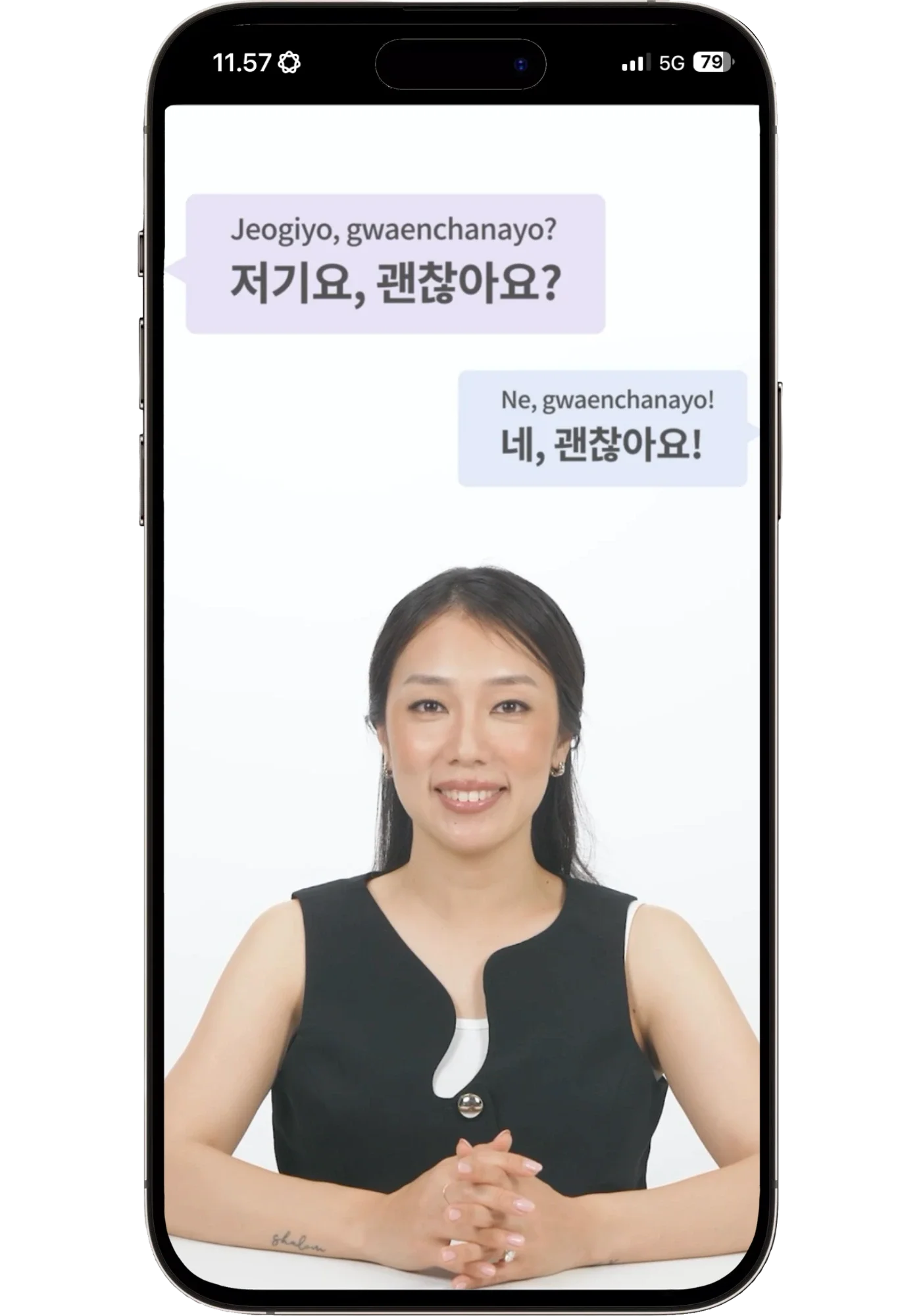
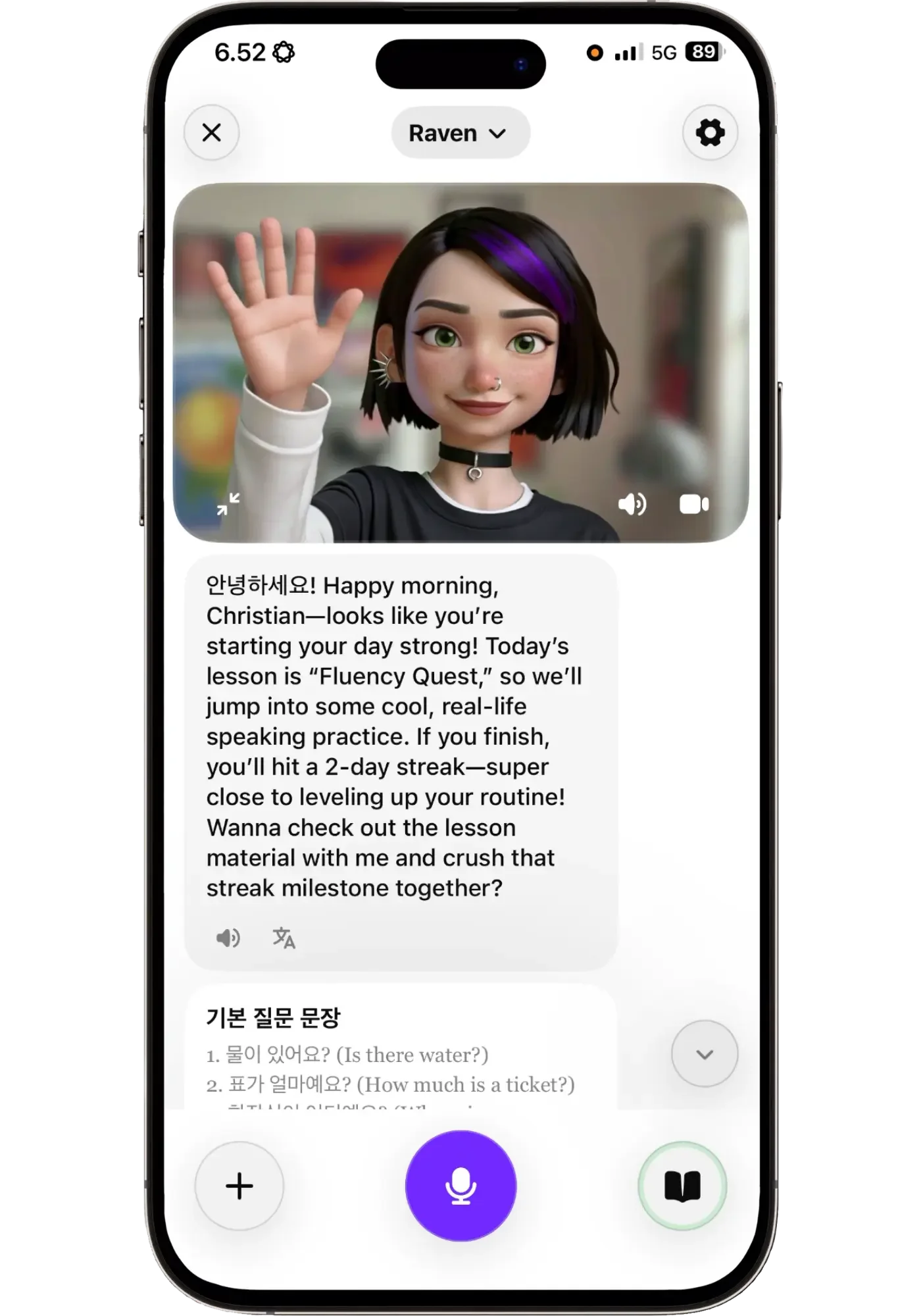
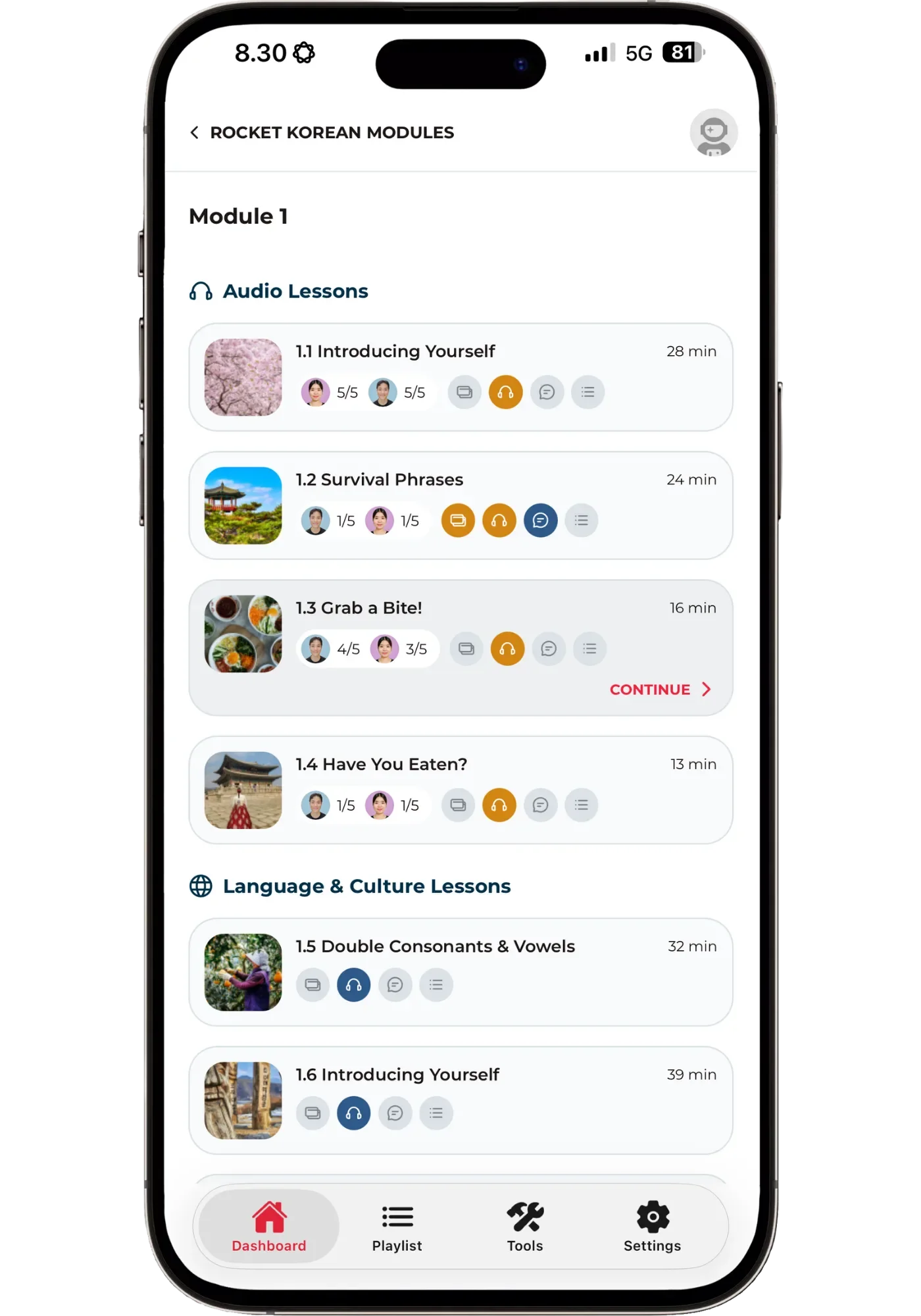
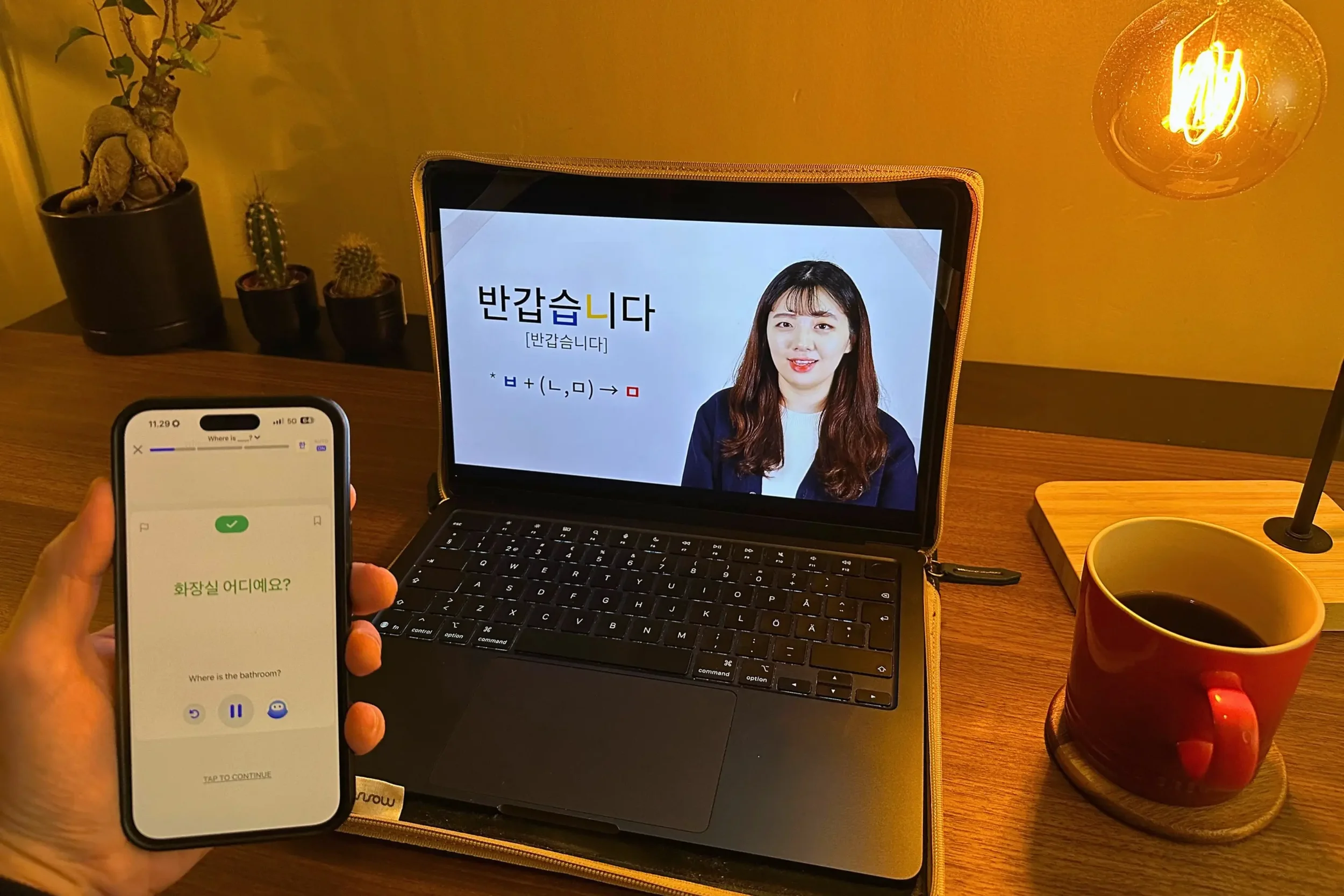
Three ways to start: a trainer, a class or a course. Pick the one you'd enjoy opening every day.
My Korean so far
My Korean so far
Every resource I’ve used since starting Korean from zero in December 2025, and when I used it. The colors show the job each one did for me.
- Foundation
- Speaking
- Comprehension
- Daily time (taller = more)
- 1April 3: After almost three months of 5–30 minutes a day, a Korean StarCraft broadcast made me commit to more. From the end of April, I was doing about an hour a day.
- 2July 15: After two and a half months of Speak, the phrases finally started coming out on their own.
- 3August 25: I committed to at least one hour of Korean every day, across whatever resources I’m using.
Note: You don't need this many resources. Some were for reviews, and for long stretches I used just one or two. Once I finish Speak, I'll shift more time to Langua, and once I finish Korean Uncovered Beginner, I'll either do the next Uncovered course or go back to Lingopie, or both.
#1: Speak — Easiest Way to Start Korean
⭐ Top PickPricing
- Premium $83.99/year ($6.99/month)
- Premium Plus $164.99/year ($13.74/month)
7-day free trial, billed annually after that.
Start your free trial →Speak has quickly become my favorite app for starting a new language. I've used it daily since February 2026 in Spanish and for several months in Korean. It gets you speaking from the first lesson, and lessons take 3–5 minutes, so it's easy to fit one in whenever you have a moment.
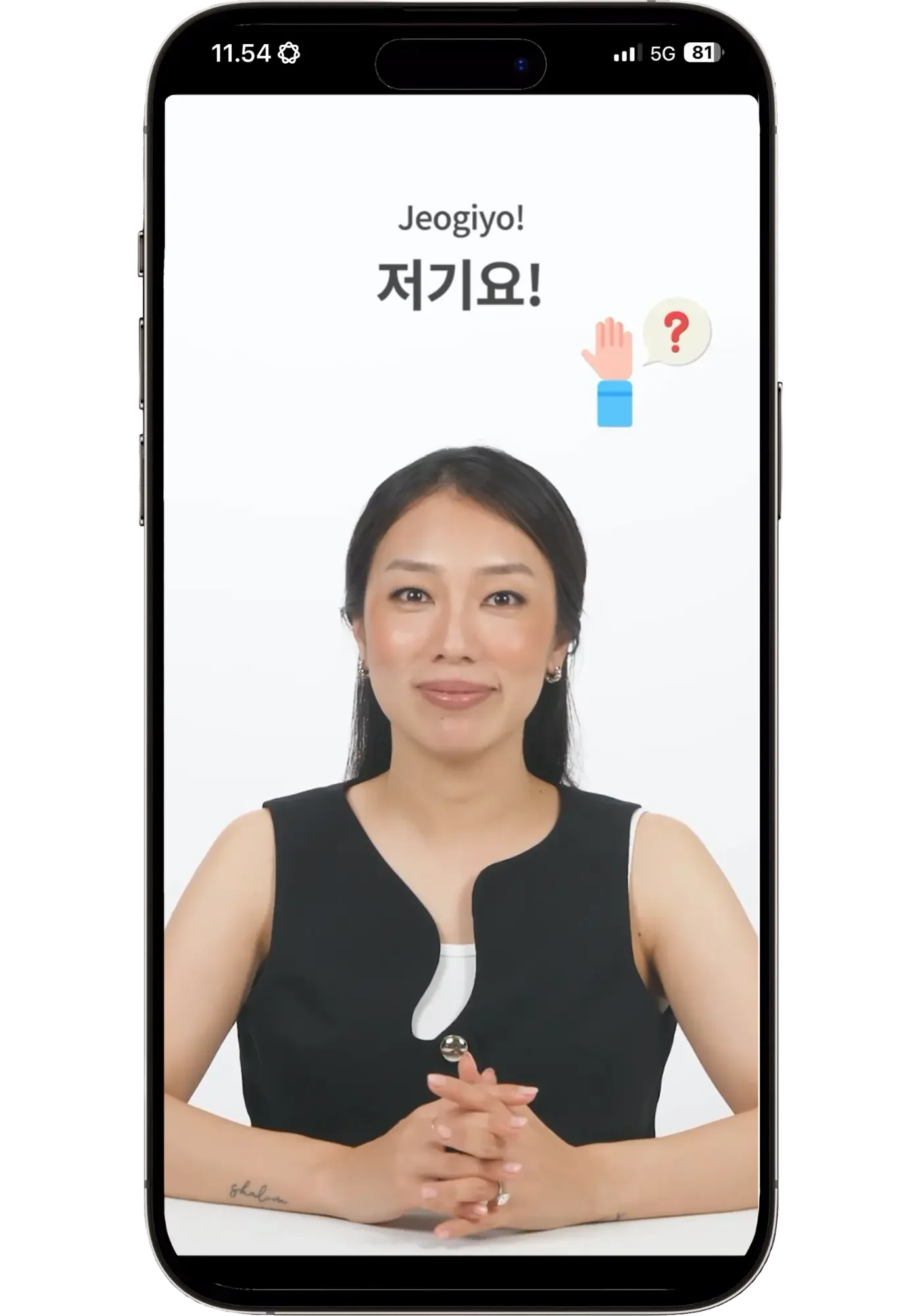
The teacher teaches phrases in short video lessons…
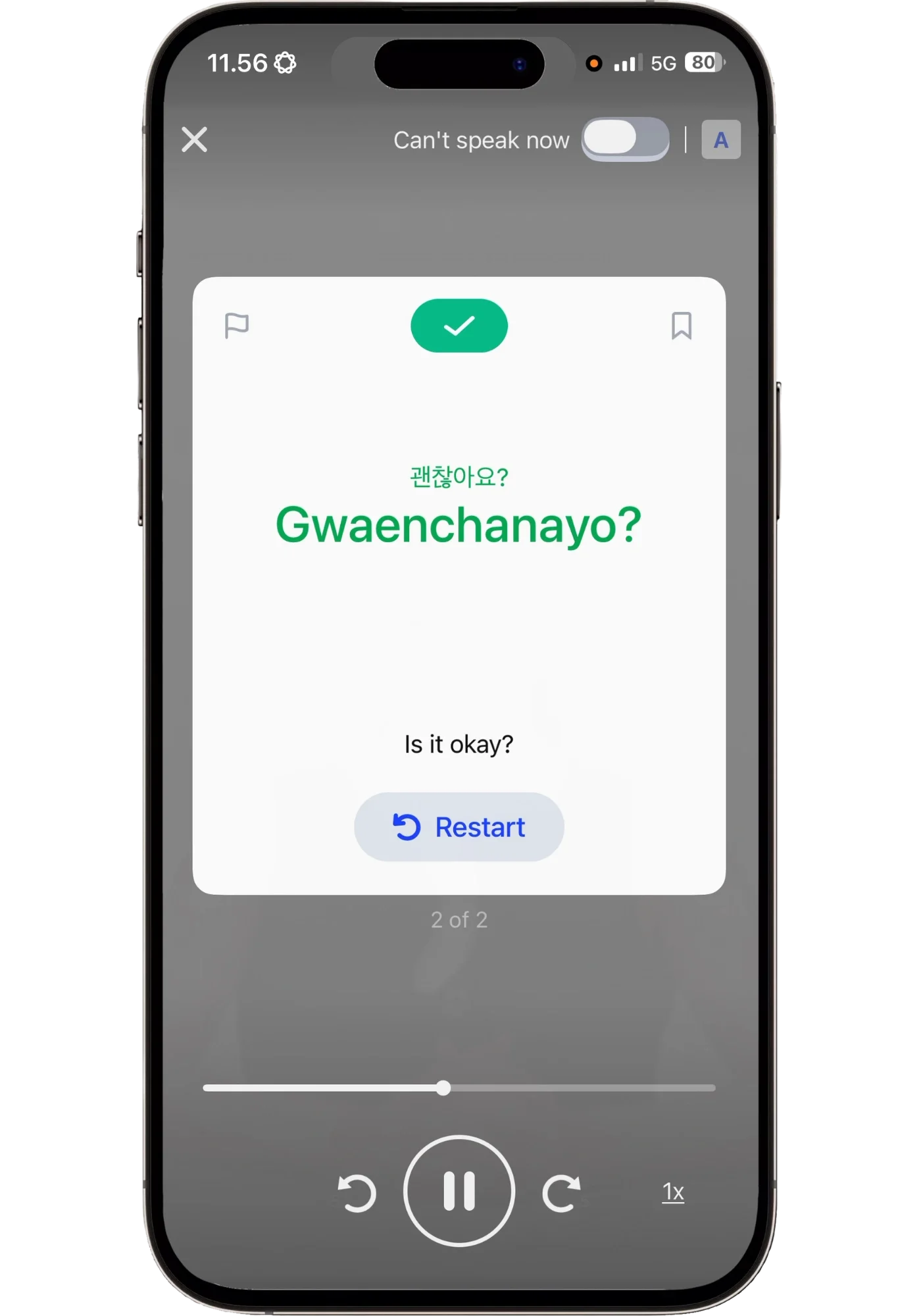
…then you say it and get checked if you said it right.
Each unit follows the same flow: video lesson → speaking drill → Vocab Builder → AI Q&A. You learn a few new phrases, practice them until they stick, swap different words into the same pattern, and then use them in short exchanges. In the drills, each word lights up as you say it, so if you miss one, you see exactly which, instead of failing the whole sentence.
My experience
I first tried Speak while testing AI apps, with no expectations, and it became a staple of my learning. After using it for Spanish, I couldn't wait to try it for Korean, but I wanted to finish Rocket first. When I started in May 2026, it had the same smooth experience: full sentences, built step by step and practiced over and over.
The first months were excellent, especially for pronunciation. The lesson on the Korean ㄹ explained tongue placement in a very easy way. And having used Speak in four languages, the Korean teacher is probably my favorite.
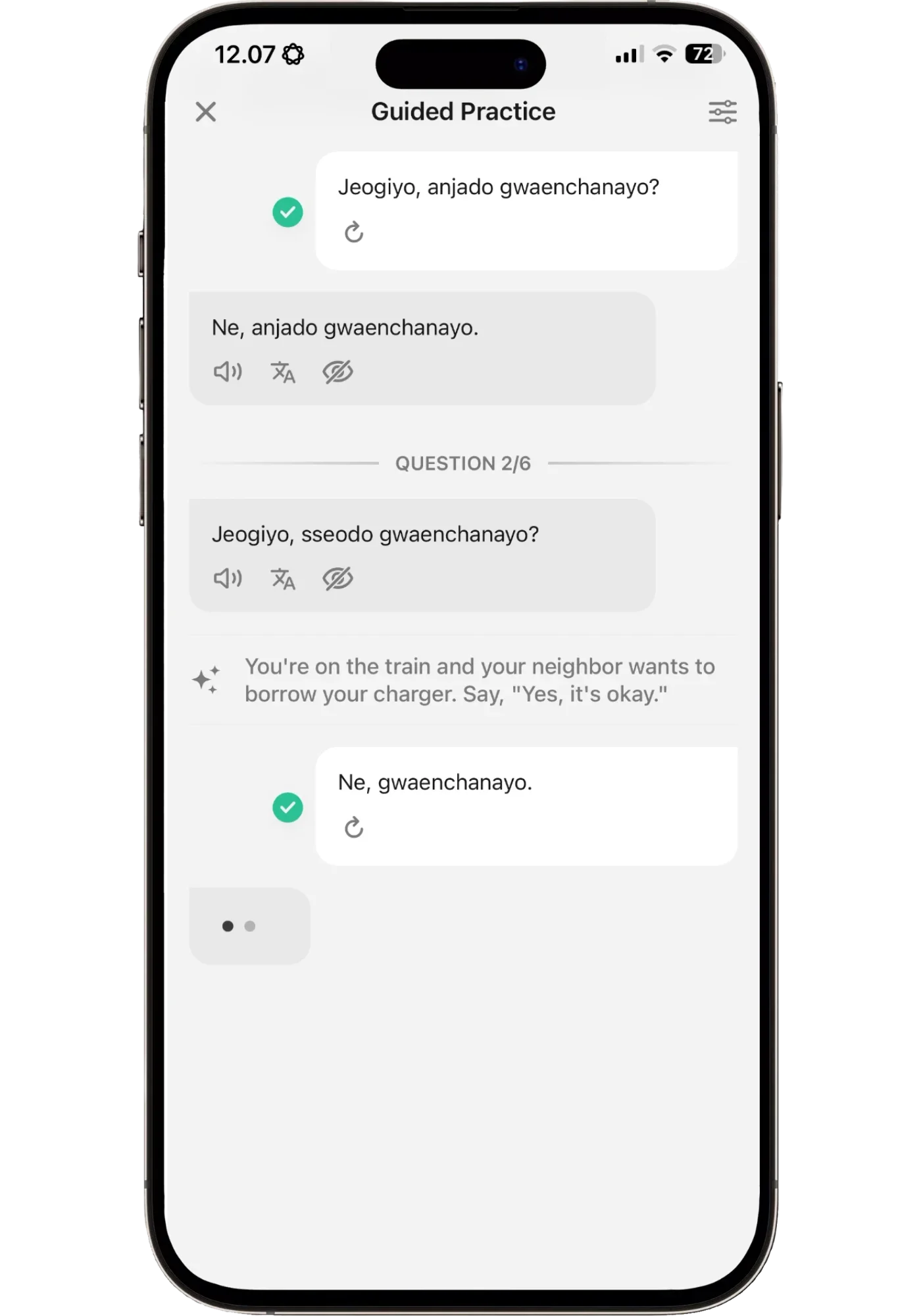
The same phrase from the video lesson, now applied to short exchanges.
Still, the Korean course has gaps. I've finished the regular path but never learned how to say what I do for a living, which Praktika and Langua both taught me in my first lessons, and "but" didn't show up until month four. The Korean course isn’t short, but it is shorter than Speak's other courses, except Mandarin, and the difficulty jumps steeply around pre-intermediate. I went from "I can do this" to repeating long sentences syllable by syllable without really knowing what they meant. I leaned on the hint button in the Q&As far more than I did in Japanese, and the later role-plays have no hints at all. I could ask the AI tutor, but once I closed its answer, I often couldn't remember a long phrase well enough to say it.
Part of that is Speak: the course needs more units at the lower levels and would benefit from more personalized lessons like the Spanish course has. But part of it is just Korean. I've hit the same wall in every Korean resource. It takes time, dedication and a fair bit of stubbornness.
And part of it was me, blasting through the lessons without reviewing. Then I tried my first Free Talk, the coffee shop scenario, with three tasks: ask for a recommendation, order a drink and ask where the bathroom is. The first time, the phrases felt familiar, but I couldn't produce them confidently. So I did it three times in a row, a few minutes each. By the third run, the phrases rolled off my tongue without thinking. That's when it clicked for me: this is the kind of repetition Korean needs.
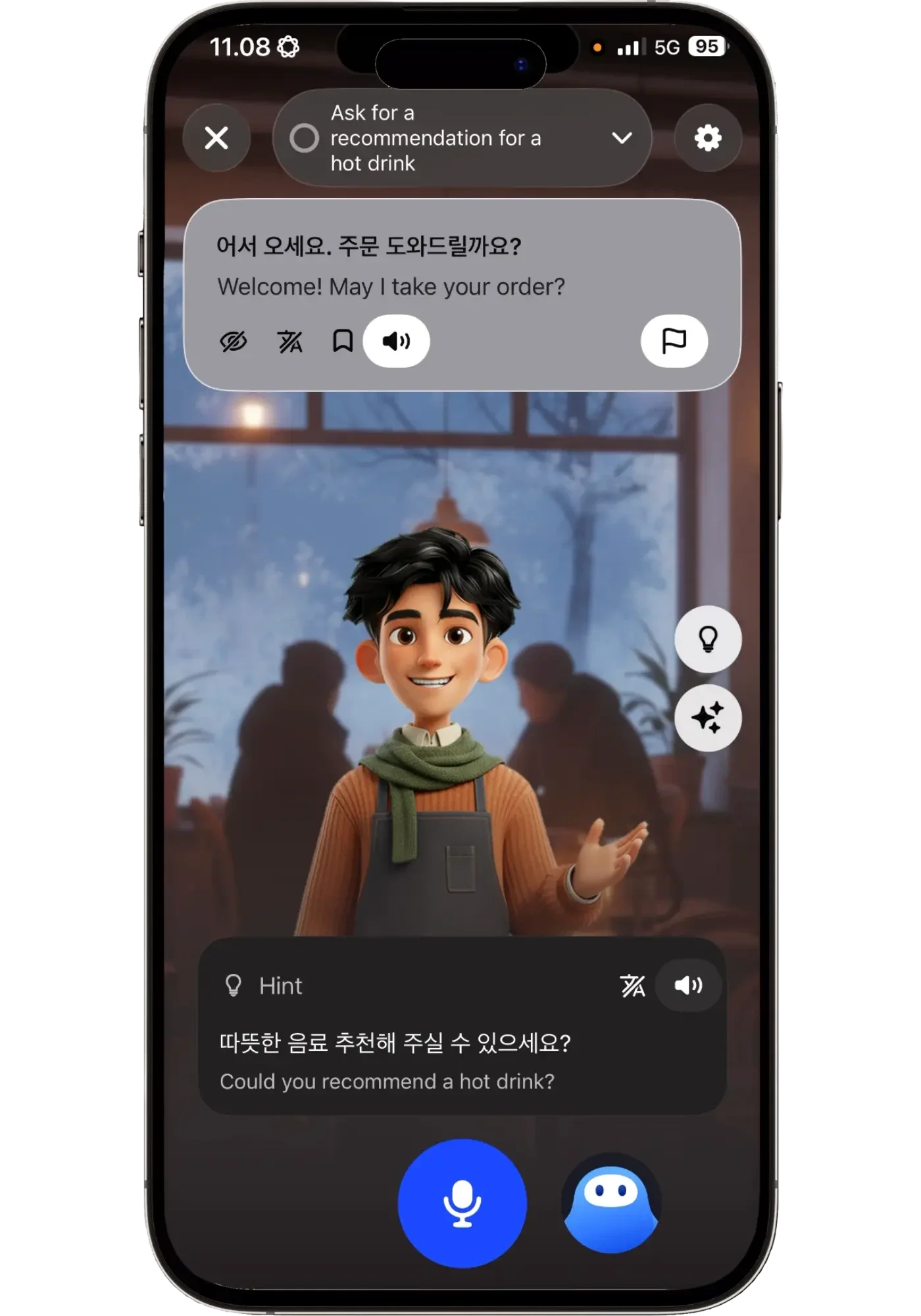
Free Talk: a set goal, a hint when you're stuck, and you can repeat it until it flows.
Free Talks work because they're open, but not too open. The tasks stay the same, but the AI says things a little differently each time, and you can vary your answers too, like ordering a small latte instead of a big one. So you learn to adapt without the conversation going somewhere you can't handle yet. Each one feels like a small challenge you can beat, and then beat again more smoothly.
✓What I Love
- Full sentences from the first lesson, on a clear step-by-step path
- Smart review that brings back what you keep missing
- Excellent pronunciation teaching for tricky Korean sounds
- Pattern drills: one structure, many words
- Very natural-sounding Korean AI voices in Q&As and role-plays
- A built-in Hangul course
- Romanization you can toggle in any lesson
- An AI tutor for grammar questions, mid-lesson
- The smoothest app I've used, and most of it works hands-free
!Honest Cons
- Shorter than Speak's other courses, with gaps in basic phrases
- A steep jump in difficulty around pre-intermediate
- Struggles to recognize isolated words like 둘 and 주세요
- Some later sentences are long and impractical
- No hints in the later role-plays
- Annual subscription only
Who it's for
If you want to speak Korean from day one and follow a clear path, it doesn't get much clearer than Speak. You drill phrases until they become muscle memory, and you can practice mini conversations over and over until you’re comfortable with them.
Pick something else first if:
You want to focus on understanding Korean. That's what Korean Uncovered is for.
You want a more thorough picture of the grammar. Try Rocket Korean.
You want a more interactive, conversational class. Try Praktika.
You want to pay month to month. Speak only has an annual plan.
Best way to use it
Do it daily. More time means faster progress (I do about 30 minutes most days), but doing it every day matters more than how long. Then just follow the path.
Do the Hangul course first or alongside the regular path. The sooner you can read Hangul, the better, both in Speak and for Korean in general. Switch on romanization only when a sentence is too hard to read, then switch it back off.
Say every sentence out loud, clearly, copying the teacher's rhythm and intonation. Speak will recognize you better, and your pronunciation will improve faster.
Repeat each Free Talk until you can get through it without hints.
My verdict
Speak understands what beginners need: a clear path with lots of repetition, so phrases stick. It's the only app I've used that teaches you a phrase and then builds on it, step by step, until you can use it in short exchanges and then mini conversations. That bridge is rare, and together with the smoothest user experience I've found in any app, it's what makes Speak so special.
The regular plan is all you need, at least to start with, and at $83.99/year, it’s very affordable. You can always upgrade later. Worried a year is too much? At 30–60 minutes a day, I finished the lesson path in about five months. After that, there’s review, plus around 60 Free Talks, including community-made ones, and you can create your own.
Want more depth? Read my full Speak review →

#2: Korean Uncovered — Best for Listening Comprehension
Pricing
- Beginner course $297, one-time payment
7-day free trial: you won't be charged until day 8.
Try Korean Uncovered free →Korean Uncovered is a story-based course from StoryLearning, built to improve your comprehension. The whole course follows one story, told in 20 audio chapters of 2–3 minutes each. You listen and read a chapter until it starts to make sense, then video lessons on vocabulary, grammar, particles, pronunciation and culture break it down, using examples from the same story.
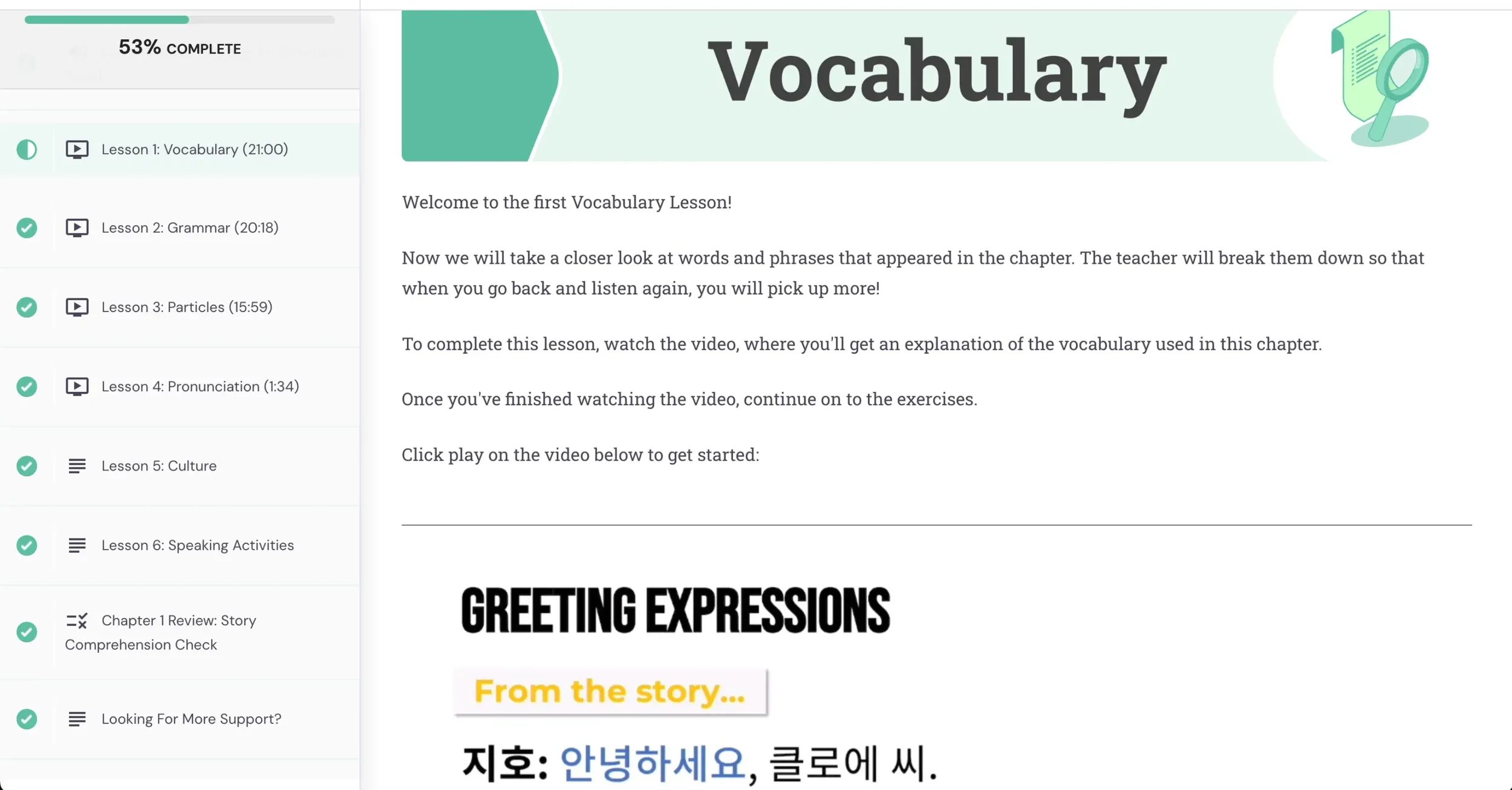
Each chapter of the story comes with its own vocabulary, grammar, particle, pronunciation and culture lessons.
My experience
I've completed four Spanish Uncovered courses and three Conversations courses in Spanish and Cantonese, but I'd never used one as a beginner. I started Korean Uncovered in July 2026.
Lingopie had been helpful, but TV shows are a mix of easy and very hard, and there's no guarantee the same words come back. I wanted something made for learners, with audio I could put on repeat during chores: a course that teaches the core vocabulary and structures in order, repeats them on purpose, and has a clear finish line. Once that foundation is in place, learning from shows gets much easier. So I was using Speak for speaking, and Uncovered for comprehension.
On day one, I put the first chapter on repeat while mowing the lawn. I listened to it thirty times before I even looked at the English translation. One phrase kept jumping out, "orenman," and in the first vocabulary lesson, it was one of the first things the teacher explained: 오랜만이에요, "long time no see." That's the course in one moment: you hear something over and over, wondering what it means, and then a lesson uncovers it.
You could put any Korean audio on repeat, but following one story means you always have a rough idea of what's going on, and you want to find out what happens next, so you keep listening. The same words also keep coming back across chapters. A word I'd heard in several chapters finally clicked in chapter 10 (the word for "help"), and words I missed in chapter 2 often became clear in chapter 13. You learn them through repetition instead of memorizing them.

Chapter 3 of the story: Alex, Chloe and Jiho stop at a café near the airport.
The actual lessons are excellent. The teacher is clear but doesn’t over-explain, so it never drags, and every example comes from the story, so after a lesson you can go straight back and listen for exactly what she taught.
The course opens with a 30-minute Hangul walkthrough. The pronunciation lessons are only 2–3 minutes each, but they taught me things Rocket and Speak never did, like the difference between ㅂ, ㅃ and ㅍ, which she shows with a piece of paper and how much air each one pushes out:
Uncovered is a challenging course, though. Everything is in Hangul, the lessons are dense, and for weeks the language can feel like it's slipping through your fingers. Around day 40, I hit a wall: my ears could pick out many words, but I couldn't connect them to meaning. A language like Spanish or French might work without looking up words. But with almost no words that sound like English in Korean, context alone wasn't enough.
What fixed it was importing each chapter into LingQ and going through it sentence by sentence: reading along with the transcript, looking up the words I didn't know and replaying each sentence until it made sense. One chapter jumped from about 50% to 70% understood in a single session. All that listening made the meanings unlock fast. It was like I already had the dictionary entries in my head and just needed to fill in the definitions.
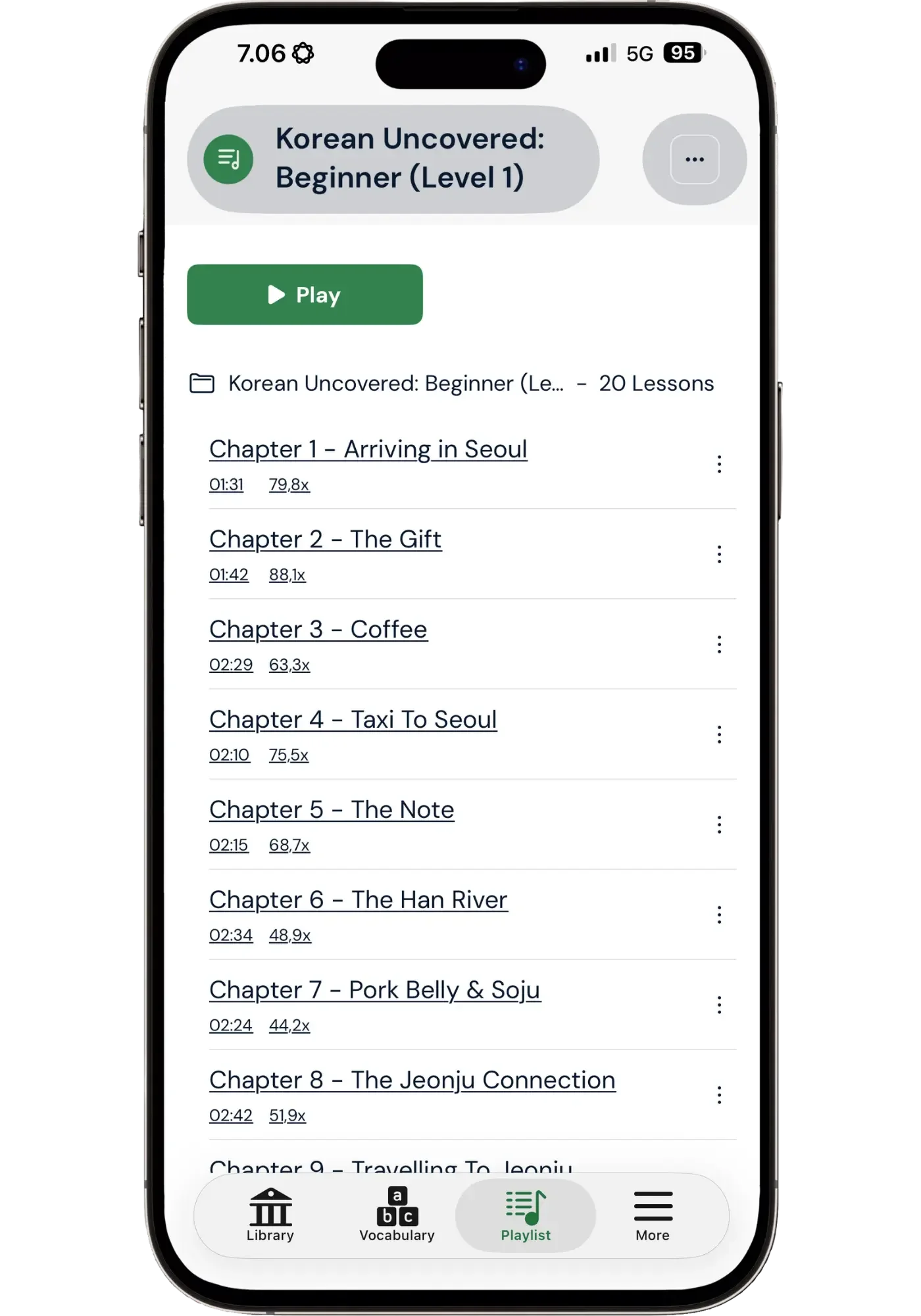
My Korean Uncovered chapters on repeat, which a playlist makes easy. Some I've played almost 90 times.
After 90 days, I understood most of the early chapters and around half of the later ones. Most importantly, Korean no longer sounds like a jumble. I hear where words begin and end, and things have started to snowball.
It also works best alongside a speaking app. The "I didn't know it would be…" pattern I'd been drilling in Speak showed up in a story chapter the same week, and hitting it in a new context made it stick.
✓What I Love
- Trains your ears like nothing else I've used
- An excellent teacher: clear, fast and to the point
- Every lesson uses examples from the story
- Short, excellent pronunciation lessons
- A 30-minute Hangul walkthrough to start
- One story, so the same words keep coming back
- Builds a foundation that makes learning from other content easier
- Months of content: 20 chapters, 51-minute story, plus lessons
!Honest Cons
- All in Hangul, so learn the script first
- Dense, fast lessons for a complete beginner
- No word lists, so you look up words yourself
- You'll need to break chapters down more than the course does
- Weak quizzes, and flashcards without audio
- Takes patience before it pays off
Who it's for
Most beginner apps teach Korean in bite-sized pieces: a phrase, a grammar point, or a short exchange. That's what you need at the start. But to understand Korean when people actually speak it, you need to hear it in context, in longer stretches. That's what Korean Uncovered is built around.
It helps your speaking too: when you've heard a phrase dozens of times in a story, it sticks.
Korean Uncovered is for you if:
You can say a few things, but you get lost when someone answers you
You want listening at the core of your learning
You're willing to push through a slow, hard start for a big payoff
If you're going all in, you can start it from day one alongside a speaking app like Speak or Praktika, or on its own if you only want to focus on comprehension. Expect it to feel hard at first. At a gentler pace, as I did, add it after one to six months, once you have some basics from any of the starter picks, including Rocket Korean.
Best way to use it
My personal routine
- 1Put every chapter in one playlistI import each chapter's audio and story text into LingQ. That gives me a playlist for listening on repeat, and everything ready for working through the text later.
- 2Listen first, many timesPut the chapter on repeat while you do other things, before touching the lessons. I listened to chapter 1 thirty times before I even looked at the translation.
- 3Do one lesson, then go straight back to the storyListen right away for what the lesson just taught. That's when things you've heard twenty times suddenly make sense.
- 4Spread the lessons outOne lesson a day, with listening in between, works better than stacking three in a row. They're dense.
- 5When listening stops helping, go sentence by sentenceIn LingQ, sentence mode matches each sentence to the audio, so I can replay one line at a time and tap any word for its meaning and romanization. The timing isn't always perfect, but you can adjust it by hand.
My verdict
Korean Uncovered has been one of the most impactful resources on my Korean journey, bar none. It takes patience, but nothing has done more for my listening.
StoryLearning gives you a 7-day free trial with access to the entire course, and you're not charged until day 8. Seven days isn't enough to see the method work, but it's enough to tell whether you'll enjoy it. If you keep it and change your mind later, there's a 365-day money-back guarantee, no questions asked. You could work through the whole course at your own pace and still get your money back if it didn't work for you.
Black Friday tip: StoryLearning usually discounts its courses heavily for a short time around Black Friday. If you're not in a hurry, join my deal alerts below, and I'll email you as soon as the sale goes live.

#3: Praktika — Best for Daily AI Lessons
Pricing
- Yearly $119.99
- 3 months $47.99
- Monthly $17.99
50% off your first payment through my link: the yearly plan is $59.99 for the first year.
Get 50% off Praktika →Praktika is often misunderstood, and I misunderstood it at first too. While you can have free chats, it's not mainly an AI conversation app. It's an AI lessons app.
That makes it better for beginners who can't say much yet. Each lesson is already planned, with a clear activity and goal. The tutor is the teacher, you're the student, and you talk (or type) your way through it. Each tutor is animated, with their own unique personality, which makes it feel more personal. You can stop to ask anything, or take the lesson in a different direction, at any point.
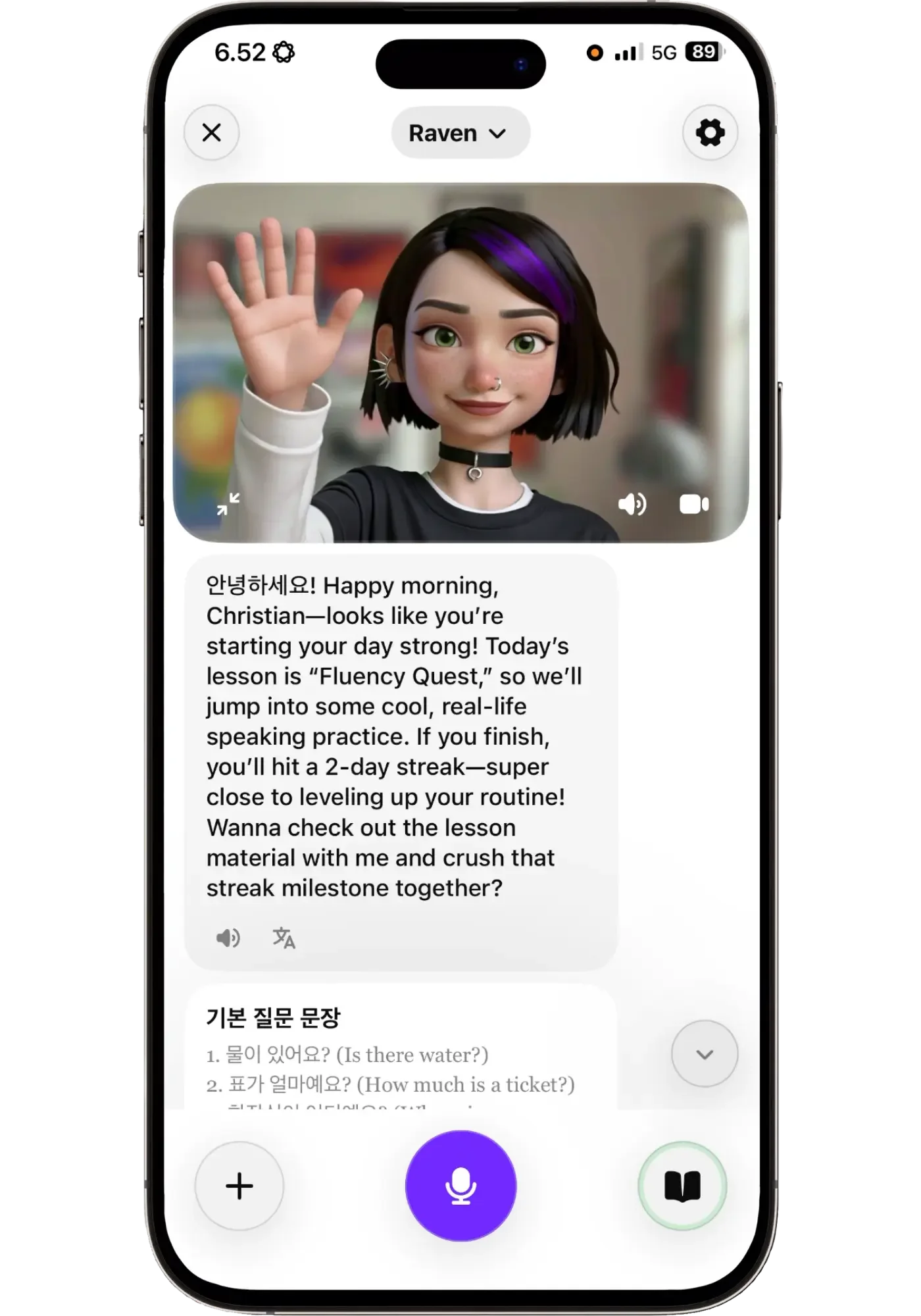
Every lesson is planned for you. Here Raven opens a Fluency Quest.
My experience
I used Praktika for Korean most days from mid-August to early September, and I've picked it back up while writing this post. I tried several of their tutors, and Raven's clear, light and slightly quirky personality was my favorite.
What surprised me most was how doable it felt. As a complete beginner, a lesson might teach you five survival words or turn numbers into a game, instead of the usual rote learning of 1 to 10. It also filled gaps Speak had left, since I could ask how to say something at any point. I quickly learned 근데 (geunde), which means "but," and could say things like "I'm Swedish, but I live in Finland." After months of feeling bad about my Korean speaking, this is where I started feeling better about it.
The biggest strength is that every lesson is already planned. You get a specific activity and a goal, instead of starting from "Hi, how's your day going?" I was curious what the next lesson would be about, which makes it easy to open the app. Not every lesson clicked with me, though. Some activities are more like quizzes: fun, but answering questions about Korean doesn’t make it stick the way using it does. Speak builds that repetition in for you. In Praktika, you have to make it happen yourself, by repeating phrases and using them in your answers.
The good news is that you can always end a lesson early or steer it toward what you need, and the things I wanted to say came up naturally. When Raven asked if I was ready to start, I wanted to know how to say “let’s do it,” so she taught me 해보자 (hae-bo-ja).
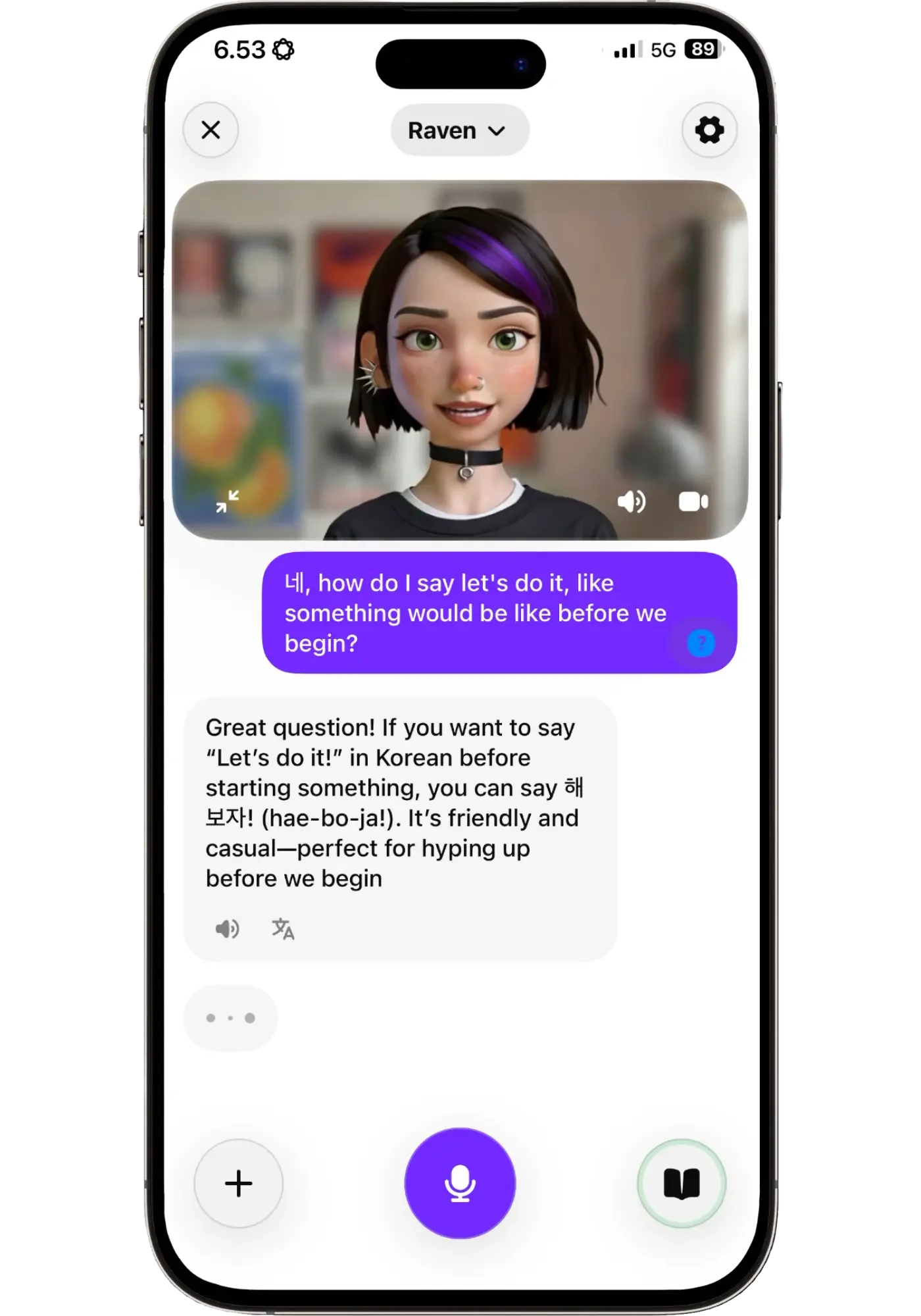
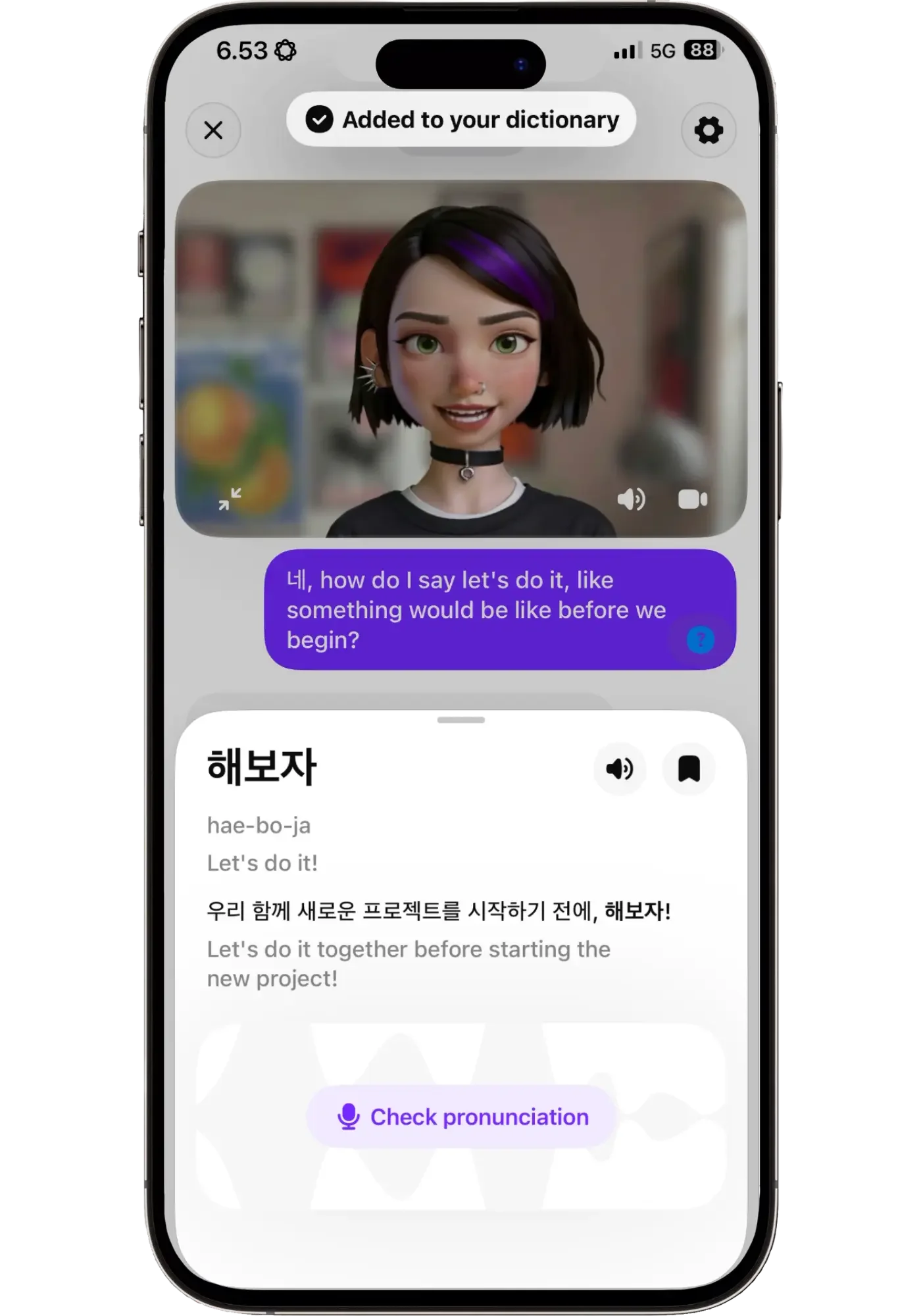
Replies come almost instantly, faster than in almost any AI app I've used, so the back-and-forth feels quick, and the avatars add a lot, even when a clap doesn't quite fit the moment. One quirk: when the tutor drops a single Korean word or particle into an English sentence, it sometimes says it with an English accent. Full Korean sentences sound natural, and you can tap any word or sentence to hear it pronounced cleanly.
The best parts of the lessons come from the detours, like this one from one of my own lessons:
The trap with Praktika at the beginner level is English. The tutor will happily explain everything in English, which is fine at the beginning, but you need to push yourself to use more Korean. Otherwise, you end up completing lots of activities without being able to say much in Korean.
The goal should be to eventually switch the tutor's teaching language to Korean. Then every lesson becomes free Korean listening practice too. Getting there with Praktika alone is possible, just unnecessarily hard.
✓What I Love
- A new, planned lesson every day
- A tutor who adapts to you, within a structured lesson
- Ask how to say anything, and it teaches you
- Feels doable as a beginner, never overwhelming
- Fun tutors with real personalities
- Very fast replies in a well-designed app
- $59.99 for the first year through my link
!Honest Cons
- You have to steer it to get the most out of every lesson
- No Hangul lessons in the beginner path yet
- Easy to lean on English
- Some lessons are quiz-like and less effective
- Occasionally confidently wrong
- Saved words review one at a time
Who it's for
Beginners who’d rather have an interactive class than drills
Learners who stay motivated when there’s someone to talk to, even an AI tutor
Anyone who wants to talk about their own life early on
Best way to use it
Start at A0 and try a few tutors until you find one whose Korean is clear and whose vibe you enjoy. Then tell your tutor what you need. I ask it to drop the romanization, to let me answer before moving on, and to put the sentence I should repeat in its own message, so it's easy to replay. Answer in Korean as much as you can. And if you can't read Hangul yet, ask it to teach you at the end of each lesson.
My verdict
Praktika is where I could finally talk about my own life in Korean: what I do for a living, where I'm from and where I live. It's the most interactive way to learn on this list, with a structured lesson every day and a tutor who adapts to you. Just push yourself to use more and more Korean to make sure it's effective.
Through my link, you get 50% off your first payment: $59.99 for your first year. Praktika’s 7-day free trial is only in the app, and the discount only works on a new account, so it’s one or the other. If you already know you want a daily AI tutor, the discount saves you the most.
Want more depth? Read my full Praktika review →

#4: Rocket Korean — Most Thorough Foundation
Pricing
- Level 1 $149.95, one-time payment
- Lifetime access
- 60-day money-back guarantee
$99.95 through my link (33% off, year-round). My link fills in the best current deal on Rocket's pricing page, so just click Apply. During seasonal sales, it's even lower.
Try free lessons first →Rocket Korean is a beginner course of almost 100 lessons that you buy once and keep. Each audio lesson is built around a short dialogue between native speakers, broken down phrase by phrase, and you practice the phrases in video role-plays. There are also flashcards, listening activities, detailed Language & Culture lessons on grammar, and writing lessons that cover Hangul step by step.
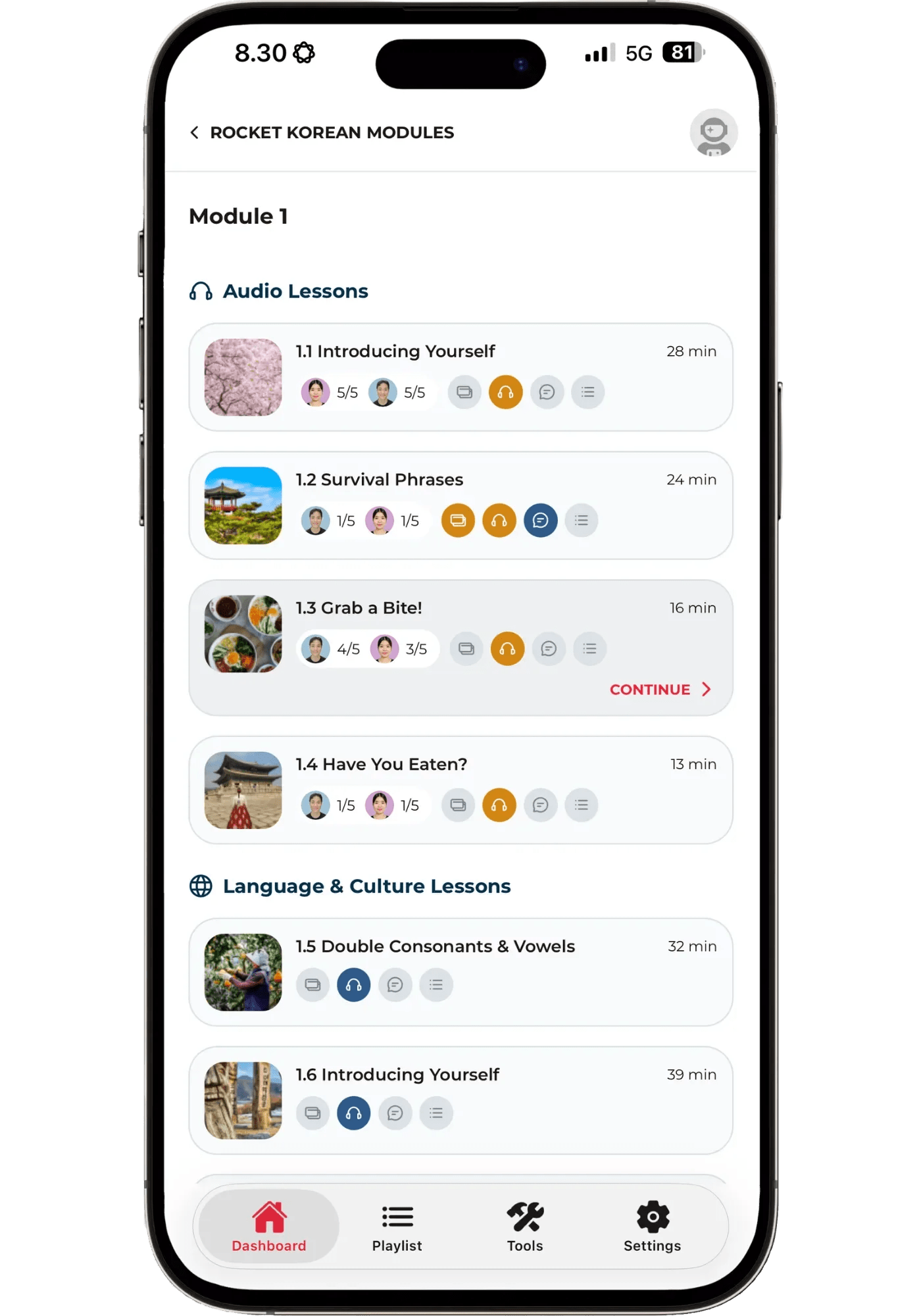
Each module mixes audio lessons, role-plays, Language & Culture (grammar) lessons, and Hangul.
My experience
Rocket Korean is where I started Korean from zero, in December 2025. I worked through the whole course at a slow but steady pace until May, and it was a great way to get my feet wet and a course I enjoyed.
The role-plays are scripted, so you always know what the other person will say. They won’t train you to react to the unexpected, the way AI conversations in Speak or Praktika do. But as a complete beginner, set phrases are a good place to start. I still use some of the ones I learned from these.
Here's a video of me doing one of the role-plays. It's fun to watch now, several months later. I can definitely hear that my pronunciation has improved since then:
The audio lessons are easy to fit in. I listened while doing the dishes and sometimes while working out. The most useful ones were simple, everyday situations, like thanking someone for a meal or saying the food is delicious: phrases you can use right away. Others felt like textbook scenarios, like going to the post office, looking for a place to live or changing a plane ticket. I still enjoyed them and learned from them, but more everyday situations would have made them more engaging.
The bigger issue is that the lessons introduce phrases more than they drill them. In the “Rocket Review” at the end of each lesson, I could almost never produce the words myself, and I’d just sit there waiting for them to come. I think that’s a flaw in the method, so go in expecting it.
The practice is up to you, and Korean takes a lot of repetition at the start. I mostly used the listening activities, which flag the phrases you found hard so you can focus on those. Some of the extra phrases in them were too long for a complete beginner, so I’d skip those. That said, the activities worked, and soon phrases were repeating in my head during the day.
What I enjoyed most surprised me: the Language & Culture lessons. They explain how Korean works, like how the past tense and verb endings are formed, very clearly, with audio examples throughout where you can listen, repeat, and check your pronunciation.
Rocket’s grammar lessons are clear and structured, but they go into a bit more detail than a beginner needs (like mentioning all the exceptions), so don’t try to memorize everything. You’ll meet it all again later with Korean Uncovered or whatever resource you use next. Treat the course as a foundation and an overview, not something where you need to master everything.
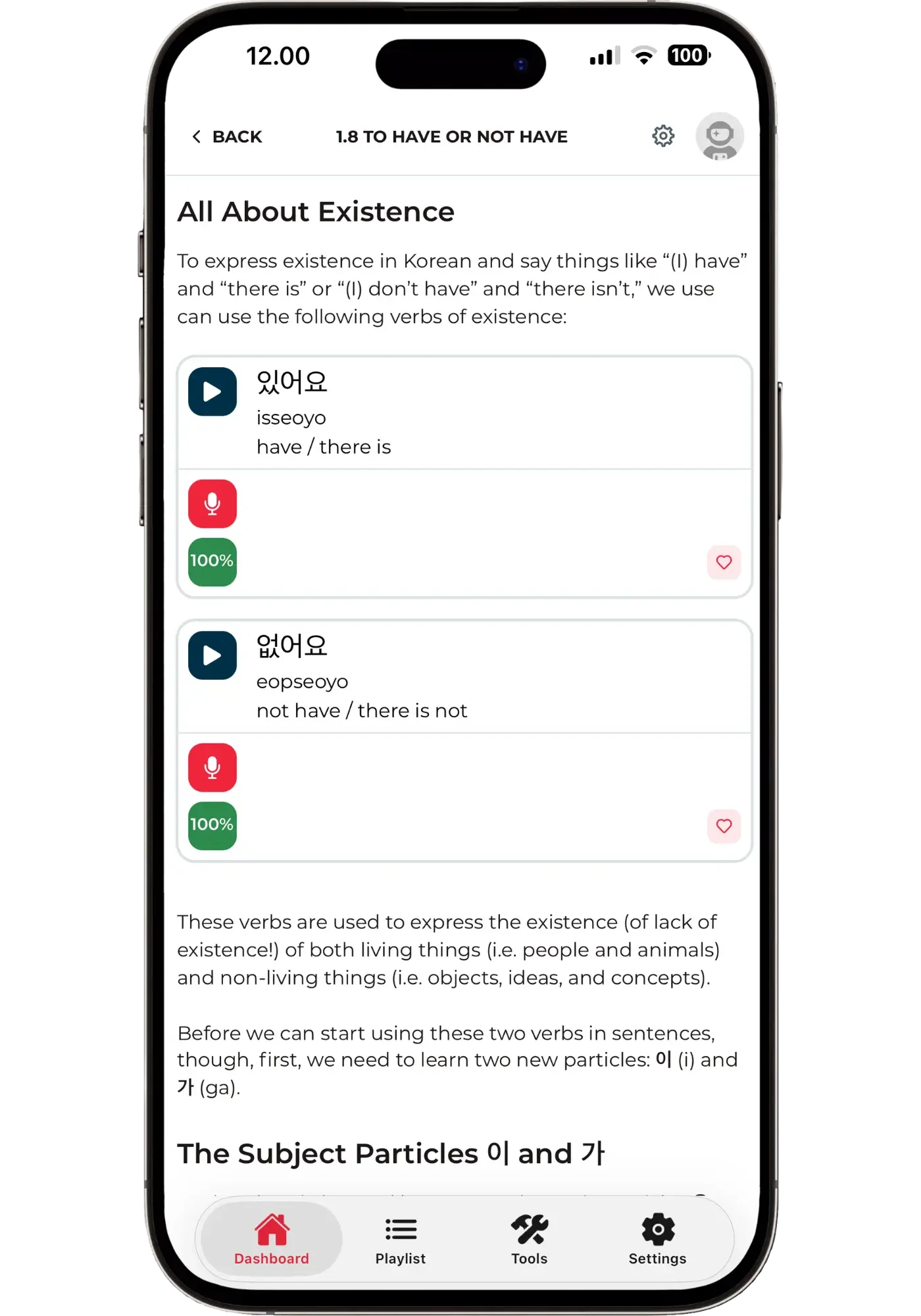
Every example has audio you can play, then record yourself to check pronunciation.
And since you pay once, you own it. You can go back to the role-plays months later and get more out of them. The app also keeps improving: when a feature disappeared from the role-plays, I emailed them on a Thursday, and it was back on Monday.
Just adjust your expectations. Rocket says the course takes you to a good conversational level, but when I finished, I’d only scratched the surface of Korean. And in my experience, no beginner course gets you conversational in a language this different from English. The course itself is still good. Think of it as a solid foundation, then move on to other resources to expand your Korean.
✓What I Love
- Covers everything: Hangul, grammar, culture, and speaking
- Hands-free audio lessons with a tappable transcript
- Clear Language & Culture lessons with audio examples
- Video role-plays that feel like a mini-game
- Listening activities that target what you miss
- Pay once, keep it forever, and download lessons for offline use
- A nice-looking app that keeps getting better
!Honest Cons
- You manage your own review
- Audio lessons introduce more than they drill
- End-of-lesson reviews come before you know the words
- Scripted role-plays, so less real speaking
- Some lessons feel too textbook to be practical
- More grammar detail than beginners need
- No tap-to-translate for single words
Who it's for
Learners who want one complete course that covers all the basics, and to pay for it only once
Anyone who wants a thorough foundation in grammar, pronunciation and writing Hangul
Learners who want a traditional course with built-in speaking practice: even the grammar lessons have you repeat after native speakers and score your pronunciation
Best way to use it
Listen to each lesson, but don't expect to nail the review at the end the first time.
Focus on Listening Activities and role-plays.
Mark impractical extra phrases as "easy" in the Listening Activities to clear them from your review queue.
Treat the grammar as an overview rather than something to memorize; much of it will click later on its own.
My verdict
Rocket is where my Korean started, and I still enjoy going back to it. Not every lesson held my interest, but it gave me a solid foundation. If you want a clear, structured and more traditional course that you pay for once and own, it's a great place to begin.
You can create a free account and try some lessons first, no credit card needed. And if you buy it and change your mind, there’s a 60-day money-back guarantee, no questions asked.
Want more depth? Read my 30-day Rocket Korean review →
Which app is best for learning Hangul?
The good news: Hangul isn't hard. It takes time to read quickly, like any new script, but it's nothing like learning Chinese characters. It's a very logical script, and the consonants are even shaped like your mouth and tongue when you say them. All four apps teach it, each in its own way:
Swipe to see all four →


Speak: interactive drills. You match sounds to letters, then read short words out loud, which shows whether you've really got them.
Korean Uncovered: a 30-minute video walkthrough with clear visuals. It's dense, but you can rewatch it, and it might be the fastest route.
Praktika: learn by asking. The beginner path doesn't teach Hangul yet, but when I told Raven I couldn't read it, she taught me a few consonants on the spot and explained why letters sometimes stack.
Rocket Korean: the most detailed, and the one I learned with. It's the only one that shows the stroke order for writing each letter.
To me, there’s no clear winner, and you can learn Hangul with any of them. Just pick the one you’d enjoy.
What I'd do if I started Korean over
Honestly, I wouldn't change much. I enjoyed starting with Rocket, and it gave me a map of the language: particles, basic grammar, how Korean sentences work, and cultural details like what's polite and appropriate. The role-plays also taught me phrases I've actually used with Koreans. When those things showed up later in Speak and Korean Uncovered, they felt familiar instead of foreign.
It's also hard to know what really made the difference. It's easy to credit whichever app you were using when something finally clicked. Things clicked for me in Praktika that hadn't in Rocket, but maybe only because Rocket had already laid the groundwork. And if I'd only used Praktika, I think I'd have made that work too. You can learn with any of these. What matters most is picking one you enjoy enough to open every day.
But if I had to pick one app to start with, it would be Speak. It's the most time-efficient app I've used: even five minutes leaves you having actually learned something. Five minutes won't make you fluent, but you have to start somewhere. For most people, Korean has to become a habit before it can become an hour a day. Today, an hour or two feels natural to me, spread across Korean Uncovered, Speak and Langua flashcards, but it didn't start that way. If I started over, I'd also redo Speak lessons more often, especially if I'd started without my Rocket foundation.
And I'd add Korean Uncovered as soon as I had some basics. It's the one course I'd call a must-have. My listening improved more in my first three months with it than at any time before, and I give it most of the credit.
What about Talk To Me In Korean and LingoDeer?
Both of these come up all the time for Korean, but I haven't used either yet, so I can't give you an honest opinion. Every pick in this post is based on my own use. I'm planning to test both, and I'll update this post once I have.
Lingopie, LingQ, and Langua are missing for a different reason. I’ve used all three for Korean, and they’re great, just not for complete beginners. That’s why they’re in the next section.
What comes next for your Korean?
Once you have a foundation, these are what I’d move on to. From around A2, they become very effective.
- My favorite app of all time: I’ve used it every day for over 7 years
- Import any text with audio and look up any word with a tap
- You won’t outgrow it until you’re very advanced
- Korean shows, movies, videos and short stories
- Short web series (2–4 minutes an episode) ease you into native Korean
- I used it heavily for two months and I’m going back soon

- The most natural AI conversation practice I’ve used, for over two years
- Podcasts and more with interactive transcripts, plus flashcards for the phrases you learn
- From around A2, it could be your main app (I’d still add something for listening)
- Pre-Intermediate and two Intermediate courses follow Beginner
- The same story-based method, one level up
- I’ve done the intermediate courses in Spanish: you get great results if you take your time with them
FAQ
Is Korean hard to learn for English speakers?
It’s one of the harder languages for English speakers. Almost no words sound like English, the word order is different, and particles take time to get used to. For me, pronunciation and forming sentences have been the hardest parts. Listening is tough too, though in my experience not quite as tough as Cantonese. So it’s not hard in the sense of being impossible. It just takes time and patience. The beginning is the steepest part, and it gets easier once the basics are in place. I’m not fluent yet, so this is based on my Korean experience so far and on learning five other languages.
How long does it take to learn Korean?
Longer than Spanish or French, that’s for sure. After about ten months of daily study, I can follow a lot of my beginner material and have very simple exchanges. But I’m still a beginner, and my Korean has too many holes for real conversations or understanding Korean dramas. Plan in months and years, not weeks. Consistency in the long run is what matters most.
What’s the best app to learn Korean as a beginner?
It depends on how you like to learn. Speak is the easiest place to start if you want a clear path that’s speaking-focused. Praktika suits you if you’d rather have an interactive class with an AI tutor. Rocket Korean is best if you want a solid foundation in how the language works. Once you know the basics, add Korean Uncovered to start understanding spoken Korean.
Can I learn Korean with just one app?
I don’t think so. Korean needs a speaking resource and a listening resource. With only a speaking app, you can say sentences but won’t understand the answer. With only a listening course, you can understand a lot but struggle to reply.
Do I need to learn Hangul before I start?
It’s totally fine to start without it, but I’d say the earlier the better. You’ll read sooner and won’t have to rely on romanization. Romanization helps at first, but it’s actually less accurate than Hangul, which tripped up my pronunciation at times. Luckily, it’s quick to learn.
Which app is best for learning Korean grammar?
Rocket Korean is the most thorough, sometimes too thorough: it covers exceptions in more detail than a beginner needs, and some lessons are long. Speak works grammar into its drills and video lessons, so you pick it up as you go, and you can ask its AI tutor about any grammar point mid-drill. In Praktika, the tutor leads every lesson, so you can ask about grammar whenever you want, and some lessons on the path focus on grammar too. Korean Uncovered teaches grammar through examples from its story, so it stays relevant because you already have the context. That’s why it’s my favorite for grammar, if I had to pick one.
How many minutes a day should I study Korean?
If you’re serious, 15–30 minutes a day is a good start, and doing it every day matters most. But Korean takes a lot of volume before you see real progress. Once you’ve built a daily habit, adding more time starts to feel natural, so work up to at least an hour a day over time. I did 5–30 minutes a day for my first three months. Now I do about an hour, sometimes two, and it really makes a difference.
Can I learn Korean from K-dramas?
Yes, and I think you should. It’s just tough at the start to understand full-speed native Korean when you don’t know many words yet. Build a foundation first, then work your way up. Lingopie is what I’d use for that. It has full K-dramas and shows, but also short, easier series, plus subtitles you can tap to translate. Here’s how my first session went.
Can I learn Korean for free?
I’m not aware of any free app that takes you from zero in a way that actually works. But you can start for free. Speak, Praktika and Korean Uncovered all have 7-day free trials, and Rocket Korean has free lessons. One catch with Praktika: the free trial is only in the app, while my 50% discount only works on a new account through my link, so it’s one or the other. If you think you’ll use it long-term, the discount is the better deal.
You can also try comprehensible input channels on YouTube. To go further, though, a paid resource gives you the structure free material usually lacks.
Conclusion
Korean takes time, more than most languages. There will be weeks when it feels like nothing is sticking, and that's normal. If you keep at it consistently, it's sinking in even when you can't see it. For me, after two and a half months of daily Speak, the phrases suddenly started coming out on their own. You just have to keep going long enough to get there.
You don't need to figure everything out before you start. You need one resource that gets you started, then you’ll figure it out as you go. And I’ll do my best to point you in the right direction along the way, through my own Korean learning journey.
If you’re not sure where to begin, here’s what I’d do: start with Speak or Praktika, whichever style you’d enjoy more, and learn Hangul along the way. And if you’d rather have one traditional course that covers everything, Rocket Korean will give you a solid foundation. Once the basics start to feel familiar, add Korean Uncovered for listening. That’s usually after one to six months, depending on your pace.
I'll keep updating this post as I test more resources and as my own Korean grows. As I like to say: learning a language is not hard, you just need time to get used to it. Korean just needs a little more time.
Want to see exactly how I fit this into my day? Grab my daily language stack.
